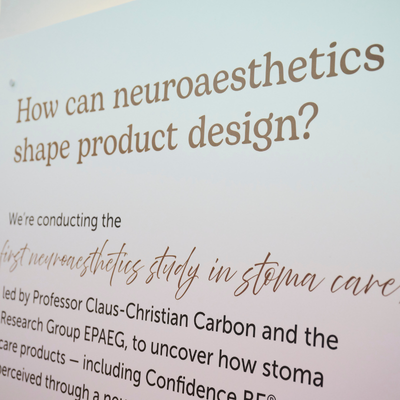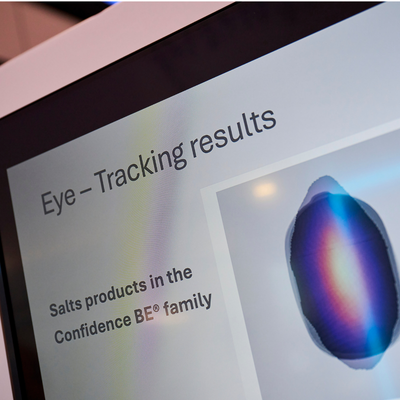
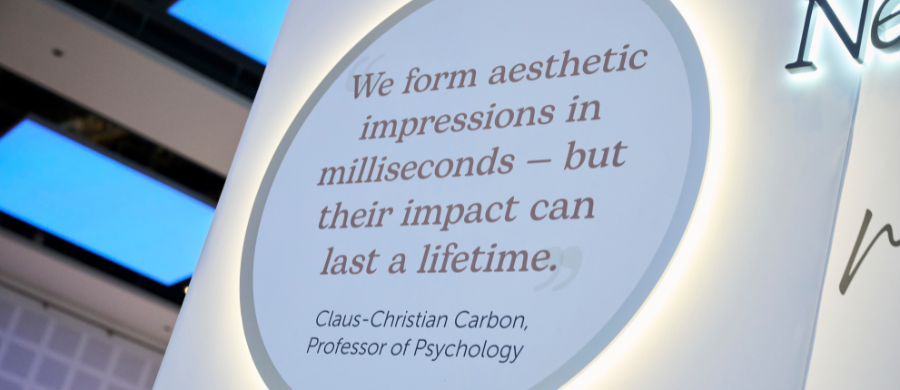
Neuroaesthetics gives you an additional way to understand your patients’ needs. Beyond clinical performance, design can influence how a patient feels about their stoma, and also how they accept it and manage their own care going forwards.
How this can support your practice
-
Helps you guide patients through early emotional responses.
-
Builds confidence by offering choices that feel more personal and proven to make a difference.
-
Supports acceptance of the stoma and long-term positive well-being.
-
Encourages open conversations about well-being and identity.
Simple steps to bring neuroaesthetics into care
-
Product recommendations: Show patients high quality products that offer choice and integrate aesthetic criteria (colour, texture, form).
-
Holistic assessment of your patients: Ask sensory questions during assessments such as “How does this colour make you feel” or “Does this design feel right for you”. Gauge their emotional responses to different products.
-
Patient education: Empower patients to know what’s available and have a level of autonomy, whilst still providing solutions that are clinically right for the patient – find a balance.
When design feels right the whole stoma experience can become easier for both you and your patients. Neuroaesthetics supports your work by helping patients feel reassured, in control and confident.