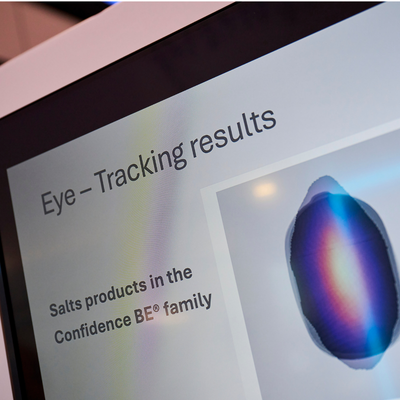
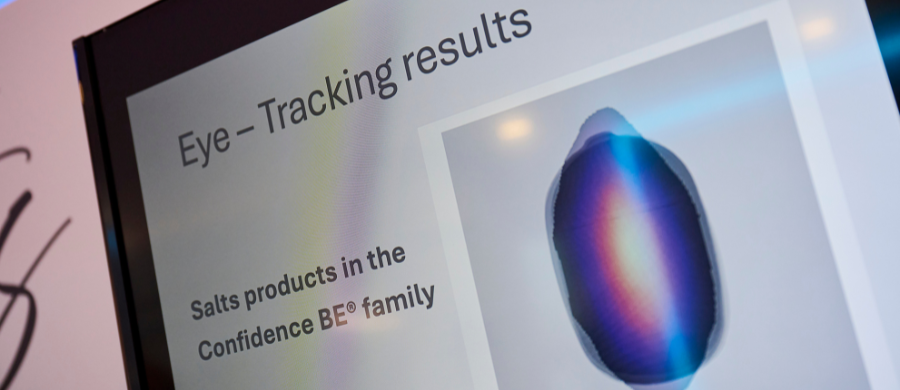
Eye tracking methodology explores how the brain responds to different product designs. The technology measures the first places we look and how long our attention stays with different features – a lot of the time it is subconscious and we don’t realise where we’re looking. This helps us understand what stands out – for both the right reasons and the wrong reasons.
What activity from studies to date shows…
-
The eye is naturally drawn to products with softer edges and materials.
-
Small refinements in design can change the way a product is explored visually – such as the embossed logo on the Confidence BE bag.
-
Negative areas draw attention for the wrong reasons – for example focus on a more obvious stoma bag outlet can lead to more negative associations with the product, and patient experience overall.
Why it matters so much
Most patients see their stoma appliance many times each day – it becomes a permanent part of their routine. A positive visual response can become a source of reassurance, whilst a negative one can evoke damaging associations with stoma experience. Eye tracking helps us measure these reactions so we can design products that support emotional wellbeing as well as clinical function.
Watch Professor Claus Christian Carbon speak further about Neuroaesthetics.