.png)
Caring for your skin
Caring for your skin is an essential part of looking after your stoma. Immediately after your surgery, your stoma and surrounding skin may look swollen and even a little irritated.
This is all to be expected post operatively and with good care it should improve in appearance over time.
You may find that your product requirements may alter due to the changes in your stoma size and shape. Your stoma template will alter and should be checked at least weekly for the first 8 weeks, or particularly if lots of healthy skin can be seen through the hole.
The area of skin around your stoma needs ongoing care and attention to prevent and reduce the risk of soreness.
If you start to develop sore, irritated or even broken skin, do not delay in contacting your Stoma Care Nurse for appropriate advice on treatment and the need for alternative products.
Signs of peristomal skin problems to look out for
While some redness or mild irritation in the first days after surgery is normal, certain signs may indicate a skin problem that needs attention. Contact your Stoma Care Nurse if you notice any of the following:
- Persistent redness, soreness or itching around the stoma
- Broken, weeping or bleeding skin
- Rash or raised skin under or around the adhesive
- Leakage under the baseplate or bag, which can quickly cause skin damage
- Changes in the size, shape or position of your stoma that affect how your bag fits
Do not wait for skin problems to resolve on their own - early intervention from your Stoma Care Nurse can prevent minor irritation from becoming a more significant issue. You can find more information on our sore peristomal skin page.
Can a leaking stoma bag lead to irritation?
Yes - leakage is one of the most common causes of peristomal skin problems. When output from your stoma comes into contact with the surrounding skin, even briefly, it can cause significant irritation. Stool and urine contain enzymes and acids that quickly break down the skin’s natural barrier, leading to soreness, redness and, if left unaddressed, skin breakdown.
Leaks most often occur when the stoma bag is not fitting correctly - for example, if the aperture is too large, if the baseplate has lifted at the edges, or if the bag has been left in place for too long. Addressing the root cause is essential. If you are experiencing frequent leaks, speak to your Stoma Care Nurse, who can review your bag fit, cutting technique and how you wear your stoma bag to help prevent future leaks.
Preventing sore skin around your stoma
Aim to keep your skin in optimum condition by considering:
- Good nourishment and hydration – take time to look at the section on our website about foods and drink options that aid healing and promote hydration.
- This could be an excellent opportunity to stop smoking – smoking affects how nutrients and oxygen might get to your skin and so results in a drier, dull skin that is at more risk of breakdown.
- Regular exercise increases your body’s metabolism and encourages oxygen to reach your skin cells quicker and in greater supply.
- Care for your skin on a daily basis; keeping it clean and moisturised as adaptation to life with a stoma depends largely on the health of the peristomal skin (skin around your stoma).
- Remove any hair from the skin around your stoma. This is so the adhesive does not pull at the hair shafts causing inflammation and trauma to the skin. How often you need to remove hair from around your stoma is very individual, and you will get to know when removal is necessary. Do not use hair removal cream
Treating sore skin around your stoma
If the skin around your stoma has already become sore or broken, the most important first step is to identify and address the cause. Common causes include leakage under the baseplate, an ill-fitting appliance, an allergic reaction to an adhesive product, or a skin condition such as folliculitis (inflammation of the hair follicles). Your Stoma Care Nurse can help determine the cause and recommend the right course of action.
While the skin is healing, some general principles can help:
- Change your bag more frequently to limit the time output is in contact with the skin.
- Clean the skin gently with plain warm water and allow it to dry completely before applying a new bag.
- Review your stoma template to ensure the aperture is not too large, which can expose healthy skin to output.
- Use a barrier product (see below) as advised by your Stoma Care Nurse to protect healing skin.
- If sore skin is not improving within a few days, or if it is worsening, contact your Stoma Care Nurse promptly.
What cream or product is good for irritated skin around a stoma?
It is important to note that standard skin creams and moisturisers are generally not suitable for use on peristomal skin, as they can leave a residue that prevents your stoma bag from adhering properly. Always seek guidance from your Stoma Care Nurse before applying any product to the skin around your stoma.
Products that are commonly recommended for irritated peristomal skin include:
- Barrier films and wipes - these create a thin protective layer on the skin surface that helps prevent output from causing further damage, while still allowing the adhesive to bond effectively.
- Barrier rings - soft, mouldable rings that sit around the stoma base to fill in any uneven contours and prevent leakage from reaching the skin.
- Medicated treatments - in some cases, your Stoma Care Nurse may recommend a prescribed antifungal or steroid preparation if there is evidence of infection or inflammation. These should only be used under clinical guidance.
For a full range of skin care products suitable for use with a stoma, visit our additional products page, or speak to your Stoma Care Nurse for personalised advice.
How changing your stoma bag correctly protects your skin
The way you change your stoma bag can have a direct impact on your skin’s condition. Gentle adhesive removal is important - pulling the bag away too quickly or without support can damage the surface of the skin. Use an adhesive remover spray or wipe to help release the seal, and always support the skin with your other hand as you peel.
When cleaning the skin, use plain warm water and a soft cloth or wipe. Avoid soaps, baby wipes or products containing moisturisers, oils or alcohol, as these can affect adhesion or irritate the skin. Pat the area dry thoroughly before applying your new appliance, as moisture under the baseplate is a common cause of skin breakdown.
For a full step-by-step guide, visit our changing your stoma bag page.
When to contact your Stoma Care Nurse about skin concerns
Your Stoma Care Nurse is your first point of contact for any skin concerns. Whether you are experiencing ongoing irritation, struggling to get a good seal, or simply unsure whether what you are seeing is normal, do not hesitate to get in touch. Early advice can prevent small problems from becoming bigger ones.
They can assess your peristomal skin, review your current products and application technique, and recommend suitable treatments or alternatives where needed. If you do not yet have a Stoma Care Nurse, you can find support through Salts Medilink.
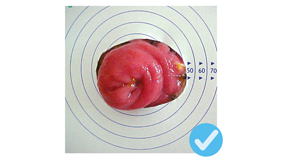
Correct Stoma Template
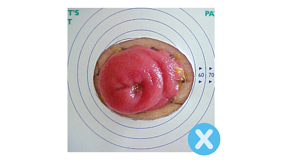
Incorrect Stoma Template



Living with a stoma
Let us help you deal with all aspects of living with a stoma, from those first few weeks after surgery to everyday lifestyle advice, including travel tips, exercise, diet and relationships and much more.
We're always here to help!
If you have any questions or require further information on any of Salts Healthcare’s products & services, please don’t hesitate to contact us.