
If you are living with a stoma, you may have already experienced pancaking - or you may be starting to notice this now.. Pancaking can be a common issue for people living with a stoma. While it can be frustrating, it is usually manageable with a few simple adjustments.
In this guide, we explain what pancaking is, what causes it, and what you can do to reduce it. We also cover when it may be helpful to speak to your Stoma Care Nurse for further support.
What is pancaking?
Pancaking occurs if the internal layers of the stoma bag stick together causing a vacuum which prevents the contents from dropping to the bottom. The stool remains at the top of the stoma bag which can potentially block the filter. The bag can also be forced off the body.
Please note: Pancaking can happen with a colostomy or occasionally with an ileostomy.
What is the difference between pancaking and ballooning?
Pancaking and ballooning are two different issues that people living with a stoma may experience.
Pancaking happens when there is not enough air inside the bag, creating a vacuum that stops stool from dropping down. Ballooning, on the other hand, is caused by a build-up of gas, which inflates the bag.
Both issues can affect how well your stoma bag performs, but they require different approaches to manage effectively.
Why does pancaking happen?
Pancaking usually occurs when there is a lack of air inside the stoma bag. Without air, the sides of the bag can stick together, preventing output from moving downwards.
Several factors can contribute to this, including:
- Thick or sticky stool consistency
- Low fibre or fluid intake
- A very flat bag profile with minimal air inside
- Filters removing too much air from the bag
- Pressure from tight clothing or waistbands
Understanding the cause can help you find the most effective way to manage pancaking.
How to prevent pancaking
If you experience pancaking, then you should try and implement the following tips, which may help:
- Place some air into the bag by blowing into the bag prior to application, then apply the filter cover, this will ensure some of the air remains within the bag, then once the stoma has functioned try removing the filter cover, this will hopefully encourage the stool to drop to the bottom of the stoma bag.
- Some people find it helpful to roll up a small piece of toilet paper or place a cotton wool ball into the bag.
- Others find using a drop of oil or liquid soap placed into the hole of the adhesive (ensuring it coats the opposite internal film) can sometimes help the output to slide to the bottom of the stoma bag.
- If you are using a drainable bag or a two piece system some individuals living with a stoma find it useful to "de-vac" or "burp" the bag to encourage air into the bag.
Please note: If you continue to have pancaking issues with your stoma bag, you should contact your Stoma Care Nurse for further advice and support.
Top tips video: Reducing pancaking
Pancaking occurs when thick stool gets stuck around your stoma. This happens because the filters are excellent at removing wind, which can completely flatten the bag. Combined with thick output, this creates a vacuum with no internal space or air cushion for the stool to drop down into, often leading to a leak.
Watch the video here:
Can diet affect pancaking?
Thicker output is more likely to stick near the top of the bag, and pancaking is most commonly experienced by people living with a colostomy. To help improve consistency, you could try:
-Drinking enough fluids throughout the day. For most people living with a colostomy, aiming for around 1.5 to 2 litres per day is a helpful guide. If you are living with an ileostomy, your fluid intake may need to be different, and you should follow the specific advice given to you by your health care team.
-Including fibre in your diet where appropriate. Dietary advice differs between colostomy and ileostomy, If you are unsure, speak to your stoma care nurse.
-Monitoring foods that make your output thicker or stickier, and adjusting where you can.
Can choosing the right stoma bag help with pancaking?
Yes - the type of stoma bag you use can make a difference.
Some bags are designed to maintain a better balance of air, helping to reduce the likelihood of a vacuum forming. Features such as filter performance and bag structure can all play a role.
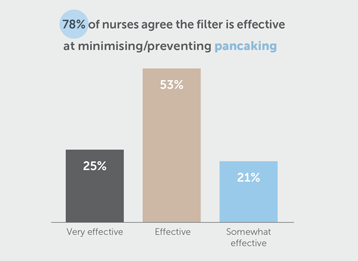
Confidence BE® Soft Convex - Nurse & User Survey 2020
Combined with user feedback, we invited Stoma Care Nurses to share their opinions on the benefits of Confidence BE® Soft Convex. This included 78% of nurses agreeing that the filter is effective at minimising/preventing pancaking
When should I contact my Stoma Care Nurse about pancaking?
Occasional pancaking is common, but you should speak to your Stoma Care Nurse if:
- Pancaking is happening frequently
- You are experiencing leaks or your bag is lifting away from the skin
- The issue is causing sore or irritated skin
- You are unsure how to manage it or need personalised advice.
Your Stoma Care Nurse can provide tailored support and recommend products or techniques to help manage pancaking effectively.
Register with the Medilink® Home Delivery Service
Get your stoma bags and additional products delivered directly to your home with Medilink®, our stoma prescription dispensing and home delivery service.
Sign up to our monthly e-Newsletter!
Subscribe NOW to our newsletter and be kept up-to-date with all things Salts Healthcare.